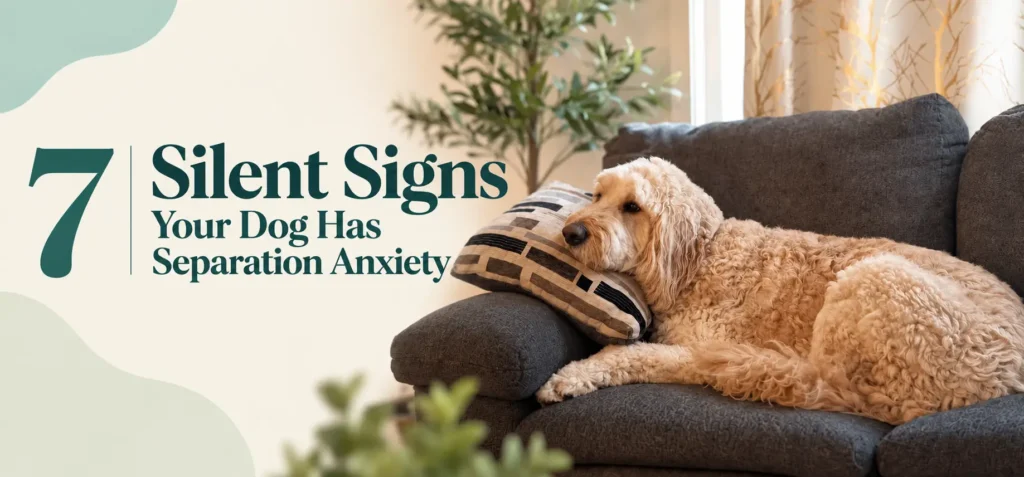
If your dog paces by the door, chews the same spot on the baseboard, or has accidents even though they are fully house trained, separation anxiety is often the reason. It shows up in small, easy to miss moments long before it becomes a full blown meltdown, and once you know what to look for, it is much easier to help.
What Separation Anxiety in Dogs Actually Looks Like
Separation anxiety is not a dog being dramatic or stubborn. It is a real stress response that happens when a dog feels unsafe without their person nearby. Some dogs show it loudly, with barking or howling the second the door closes. Others show it quietly, and that is the version most owners miss.
A dog with quiet separation anxiety might seem completely fine at drop off, then spend the next few hours pacing, drooling, or lying by the door refusing to settle. Because you are not there to see it, it often gets written off as “my dog is just independent” or “my dog sleeps all day,” when the opposite is true.
7 Signs Your Dog Has Separation Anxiety
1. Pacing or whining before you even leave
Watch your dog while you get ready to leave. If they start whining, following your every move, or pacing between you and the door before you have even grabbed your keys, their body is already anticipating the stress of being alone.
2. Destructive chewing near doors and windows
Chewed door frames, scratched window sills, and torn up blinds are not random boredom. Dogs with separation anxiety often focus their chewing and scratching on exit points, because on some level they are trying to get out and find you.
3. Excessive drooling or panting with no clear cause
If you come home to a damp crate, a wet floor by the door, or your dog panting heavily on a cool day, that is a stress response, not the heat. Anxious drooling and panting usually happen in the first thirty minutes after you leave.
4. Accidents despite being fully house trained
A dog who is reliably house trained but suddenly has accidents only when left alone is not being difficult. Anxiety affects digestion and bladder control the same way it does in people. This is one of the clearest signs owners overlook, because it feels like a training issue when it is actually an anxiety issue.
5. Barking or howling that neighbours mention
If a neighbour has ever said your dog barks or howls the moment you leave and stops the second you get back, that is a strong indicator. Dogs with separation anxiety are not barking at noises outside. They are calling for you.
6. Following you from room to room, unable to settle
A dog who cannot relax unless they can see you, who gets up every time you change rooms, or who lies against the bathroom door while you shower, is showing you they rely on your presence to feel calm. This pattern often gets worse right before you leave the house.
7. Loss of appetite when you are not home
Some dogs will not touch food, treats, or even a favourite chew toy while their owner is out, then eat normally the moment you walk back in. If a treat that usually disappears in seconds is untouched hours later, stress is very likely the reason.
Why Some Dogs Struggle More Than Others
Rescue dogs, dogs who were rehomed, and dogs who had an inconsistent routine early in life are more prone to separation anxiety, but it can affect any dog at any age. A recent move, a change in work schedule, or even a new pet in the home can trigger it in a dog who was previously fine being alone.
Breed does not determine this nearly as much as attachment style and routine do. A calm, consistent environment matters far more than the breed listed on paperwork.
What Actually Helps a Dog With Separation Anxiety
The good news is that separation anxiety is very manageable once you know what your dog needs. A few things genuinely make a difference:
- Practice short, calm departures so your dog learns you always come back
- Keep goodbyes low key. Excited or drawn out goodbyes can raise anxiety, not lower it
- Build a predictable daily routine around meals, walks, and rest
- Give your dog structured physical activity so they are settled, not just tired
- Avoid long stretches of total isolation, especially for dogs who already show early signs
The dogs who improve the fastest are usually the ones who get consistency. Same routine, same expectations, and ideally the same familiar people rather than a different face every time.
When Daycare or Boarding Can Actually Help
A lot of owners assume boarding or daycare will make separation anxiety worse, but for many anxious dogs the opposite is true, as long as the environment is right. A loud commercial kennel with rotating staff and dozens of unfamiliar dogs can absolutely make an anxious dog worse. A calm, home based setting with the same two caregivers every visit is a completely different experience.
This is exactly why we built Max and Joy the way we did. Dogs stay inside our actual home in Greater Sudbury, not in cages or kennel runs, and it is always Sim and Heena, the same two people every single time. For dogs who struggle with change or unfamiliar environments, that consistency alone makes a real difference. If your dog shows any of the signs above, our doggy daycare in Sudbury and our home based dog boarding in Sudbury are both built with anxious and reactive dogs specifically in mind, and every dog does a free meet and greet first so nothing feels rushed or unfamiliar.
Frequently Asked Questions
Can separation anxiety in dogs be cured?
It can usually be significantly improved and often fully resolved with consistency, structured routine, and the right environment. Severe cases may need support from a vet or a certified trainer alongside these changes.
Does doggy daycare help with separation anxiety?
Yes, for many dogs a calm, home based daycare with consistent caregivers helps build confidence and reduces isolation. A loud, high volume facility can have the opposite effect, so the environment matters as much as the decision itself.
Is separation anxiety worse in rescue dogs?
Rescue dogs and dogs with an inconsistent early history are more prone to it, but any dog can develop separation anxiety after a change in routine, a move, or a change in the household.
How long does it take to see improvement?
Many dogs show noticeable improvement within a few weeks of consistent routine and calm departures. Every dog is different, and dogs with a longer history of anxiety may take longer.
A Calm Environment Makes the Difference
If your dog is showing any of these signs, you are not imagining it, and you are not doing anything wrong. Dogs communicate stress in small ways long before it becomes a bigger problem, and the right environment can change everything.
If you want to talk through what might help your dog specifically, reach out to Sim and Heena at Max and Joy. Call (249) 979-0220 or book a free meet and greet through our website. We would be glad to meet your dog.